
Description
Psilocybe semilanceata – Liberty Cap Mushroom
One of the most widely recognized psilocybin mushrooms in the world.
Psilocybe semilanceata, commonly known as the Liberty Cap, is a small, wild-growing magic mushroom native to temperate grasslands across Europe, North America, and parts of Central Asia. It is one of the most potent naturally occurring psilocybin mushrooms and has a long history of traditional and ceremonial use.
What Is the Liberty Cap?
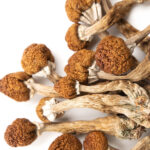
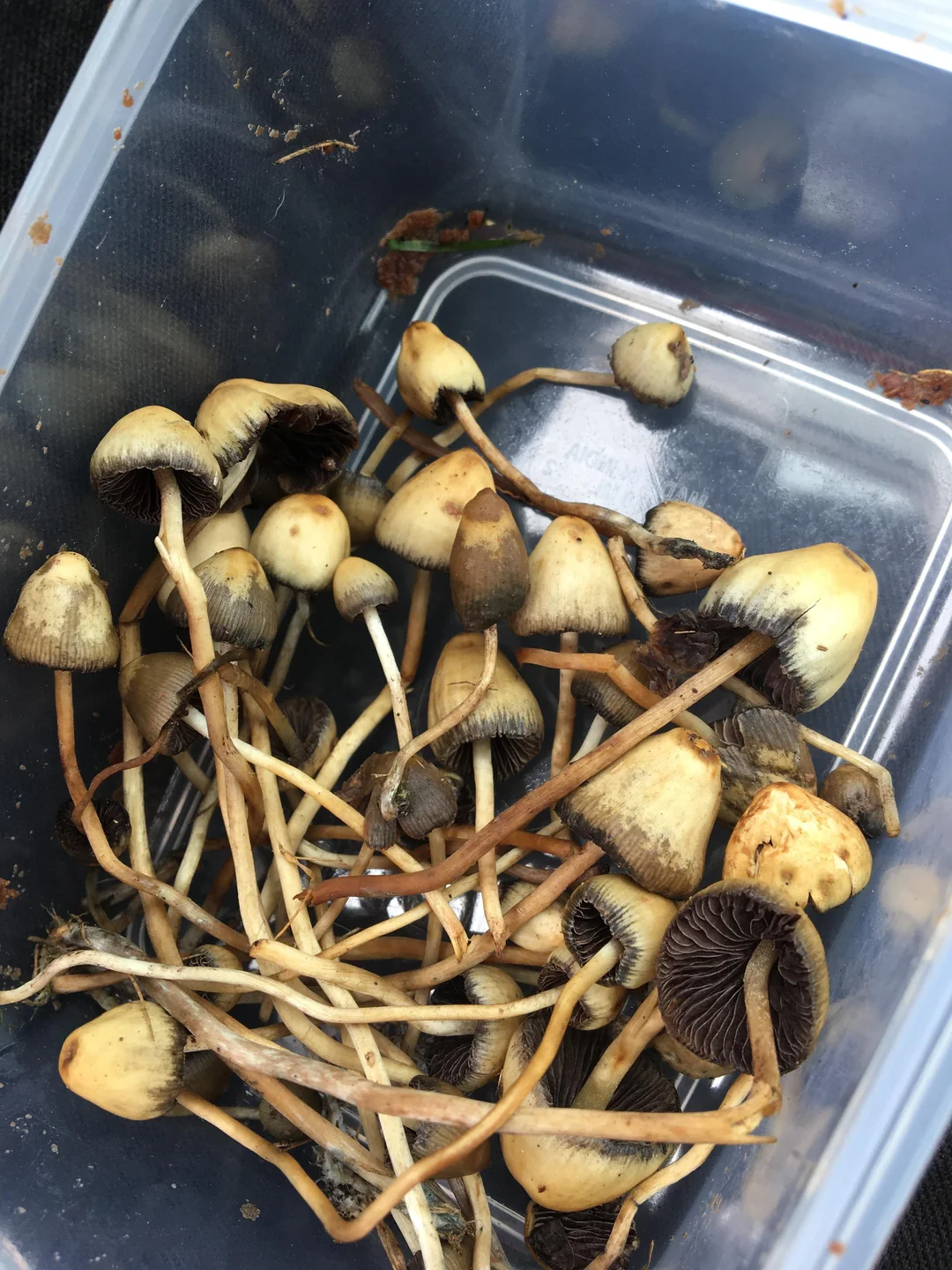
The Liberty Cap gets its name from its distinctive pointed cap, which resembles the Phrygian cap — a historical symbol of freedom. The mushroom is small and slender. Its cap ranges from 5 to 25 mm wide. It has a conical to bell-shaped top with a sharp central nipple, known as an umbo.
The stem is thin, wavy, and pale cream to light brown in color. The gills are narrow and darkly pigmented, turning deep purple-brown as the mushroom matures. The flesh bruises blue when damaged — a reliable indicator of psilocybin content.
Key Characteristics
- Cap: Conical, hygrophanous (color-changing with moisture), olive to tan
- Stem: 4–10 cm tall, slender, with a persistent silky veil ring
- Spore print: Dark purple-brown
- Habitat: Damp, grassy meadows, pastures, and hillsides — particularly where livestock have grazed
- Season: Late summer to early winter
Active Compounds
Liberty Caps contain three primary psychoactive compounds:
- Psilocybin – the main psychoactive prodrug
- Psilocin – the active metabolite responsible for psychedelic effects
- Baeocystin – a lesser-studied secondary alkaloid
Potency is notably high. Dried Liberty Caps typically contain 1.0–2.37% psilocybin by dry weight, making them significantly stronger than many cultivated species such as Psilocybe cubensis.
Historical and Cultural Context
Psilocybe semilanceata has been documented in European folk traditions for centuries. It was among the first mushrooms formally identified in scientific literature as psilocybin-bearing, with landmark research conducted in the 1960s and 1970s. Today, it remains a subject of growing interest in mycology, ethnobotany, and clinical psychedelic research.
Habitat and Identification Tips
Liberty Caps grow in undisturbed, nutrient-rich grasslands. They do not grow directly from dung but thrive in soils enriched by it. They are most commonly found in autumn after rain, often in large scattered groups.
Important: Always verify identification with an expert or qualified mycologist before handling or consuming any wild mushroom. Several toxic lookalikes exist, including species in the Galerina genus.
Legal Status
The legal status of Psilocybe semilanceata varies by country and jurisdiction. In many regions, psilocybin and psilocin are classified as controlled substances. Always check and comply with local laws before purchasing, possessing, or researching this species.
Reviews
There are no reviews yet.